
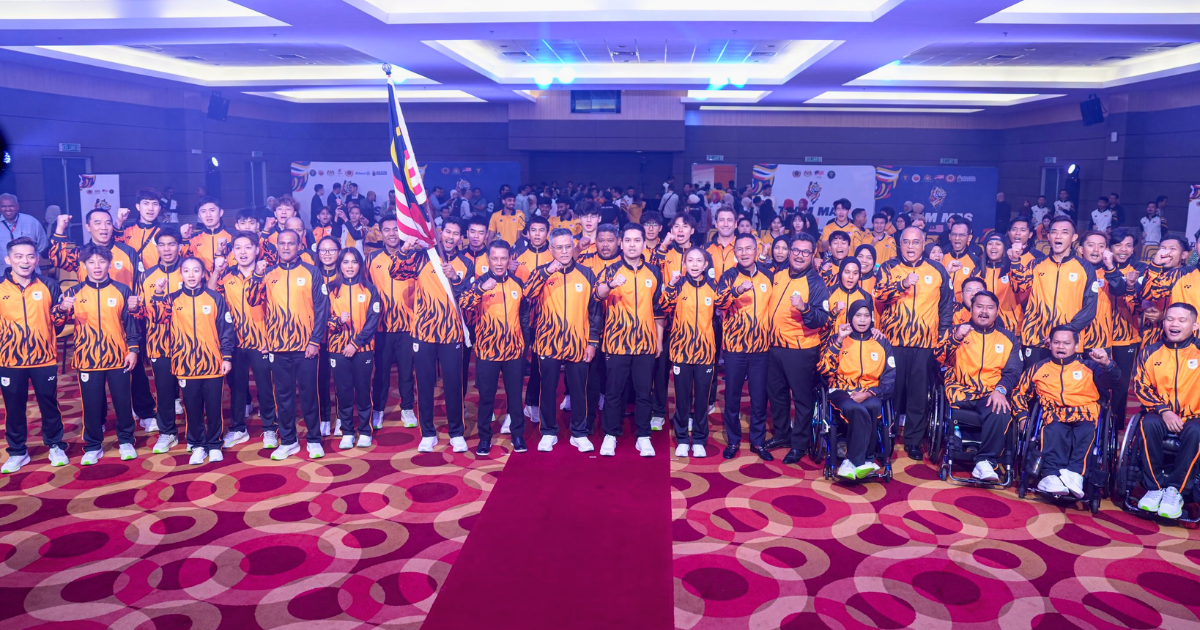
Malaysia will arrive in Glasgow next week carrying a smaller contingent, competing in fewer sports, and without two of its most reliable gold-medal factories.
Yet expectations remain remarkably unchanged.
Despite the removal of badminton and rhythmic gymnastics from the 2026 Commonwealth Games programme, Malaysia has set an ambitious target of five gold medals, two silvers and four bronzes for the Games, which run from July 23 to August 2.
On paper, it is a bold objective.
At the 2022 Birmingham Games, Malaysia collected seven gold medals. Four of those came from badminton and rhythmic gymnastics—sports that will not feature in Glasgow’s scaled-down edition. Logic would suggest a lower target. Instead, the Malaysian contingent believes it can replace those missing opportunities elsewhere.
For Chef de Mission Datuk Awalan Abdul Aziz, the target is not built on optimism alone.
“We discussed it with the coaches and athletes, analysed the opposition and assessed our own capabilities,” Awalan said during the Jalur Gemilang handover ceremony at the National Sports Council in Bukit Jalil.
“The target was derived based on facts and analysis. We did not simply come up with the numbers.”
A Smaller Games, But Not Smaller Ambitions
The Glasgow Games will look very different from previous editions.
Only 10 sports will be contested, compared to more than 20 at recent Commonwealth Games. As a result, Malaysia will send just 59 athletes, significantly fewer than the 104 athletes who competed in Birmingham four years ago.
The reduction has forced national sports authorities to rethink where medals can be won.
Instead of relying on traditional powerhouses like badminton, attention has shifted toward sports that have quietly developed world-class athletes over the past Olympic cycle.
Track cycling, lawn bowls, weightlifting, judo, para powerlifting and para athletics have all been identified as key medal opportunities.
The confidence is not unfounded.
Malaysia heads to Scotland with several athletes already established among the world’s elite in their respective disciplines.
The End of the Target-Free Experiment
This campaign marks a swift U-turn in administrative philosophy. After abandoning specific medal targets for the Hangzhou Asian Games to “reduce pressure” on athletes, the Ministry of Youth and Sports has brought back the hard key performance indicators (KPIs).
It is a move designed to provide clearer performance benchmarks for athletes and officials alike.
“The target was derived based on facts and our analysis. We discussed it with the coaches and the athletes, and we also analyzed the performances of our opponents and their current form”, explained Chef de Mission Datuk Awalan Abdul Aziz.
According to NSC director-general Jefri Ngadirin, the “5-2-4” formula is the product of the “Excel Core” program—a data-tracking system that quantitatively stacks Malaysian performance metrics against their international rivals. In measurable disciplines like weightlifting, they know exactly what their rivals are lifting; in qualitative sports like lawn bowls, they are leaning heavily on world ranking trajectories.
But data doesn’t win medals on the day. With the delegation slashed from 104 athletes in Birmingham to a highly concentrated squad of just 59 in Glasgow, there is absolutely zero margin for error.
Familiar Champions, New Expectations
Much of the spotlight will inevitably fall on para stars Abdul Latif Romly and Bonnie Bunyau Gustin.
Latif, who was entrusted with carrying the Jalur Gemilang, remains one of Malaysia’s most decorated para athletes and continues to set the benchmark in para long jump. Bonnie, meanwhile, has become synonymous with dominance in para powerlifting, consistently delivering on the biggest stages.
Beyond the established names, lawn bowls presents another intriguing opportunity.
Malaysia’s Emma Firyana Saroji, who recently climbed to world No. 1, enters Glasgow carrying genuine gold-medal expectations. Her rise reflects the growing strength of Malaysian lawn bowls, a sport that has quietly become one of the country’s most consistent international performers.
The challenge, however, extends beyond individual athletes.
The Commonwealth Games often reward depth rather than star power alone. With a reduced programme and fewer events available, every medal opportunity becomes magnified.
One mistake, one injury or one upset can dramatically alter a nation’s final tally.
Replacing What Is Missing
Perhaps the most fascinating aspect of Malaysia’s Glasgow campaign is not the target itself but what it represents.
For decades, badminton has been one of Malaysia’s most dependable sources of Commonwealth success. Rhythmic gymnastics also emerged as a major contributor in Birmingham.
Neither will be present in Glasgow.
The absence of those sports has created a vacuum that other disciplines now have the opportunity—and responsibility—to fill.
Rather than viewing the situation as a setback, Malaysian officials see it as a chance to showcase the country’s growing sporting diversity.
The athletes may be fewer in number. The sports may be reduced.
But the ambition remains unchanged.
As Glasgow approaches, Malaysia’s challenge is straightforward: prove that success at major multi-sport events is no longer dependent on a handful of traditional strongholds.
Five gold medals would represent a significant achievement for a contingent competing without two of its most successful Commonwealth sports. More importantly, it would underline the growing depth of Malaysia’s medal prospects across a broader range of disciplines.












“I never thought I’d enjoy training this much until joining Sportif. The coaches are supportive and really know how to bring out the best in you.”