
For the past two years, the tech industry has chased the dream of autonomous AI agents with a mix of breathless excitement and quiet dread.
We have been promised digital assistants capable of booking our flights, organizing our schedules, and cross-referencing deep research queries entirely in the background.
But giving an AI the keys to an operating system has historically felt like inviting a highly capable, yet occasionally erratic, stranger into your home.
One wrong prompt or systemic error, and that helpful assistant might accidentally overwrite your local files or wipe a critical database.
Google thinks it has found the ultimate containment protocol.
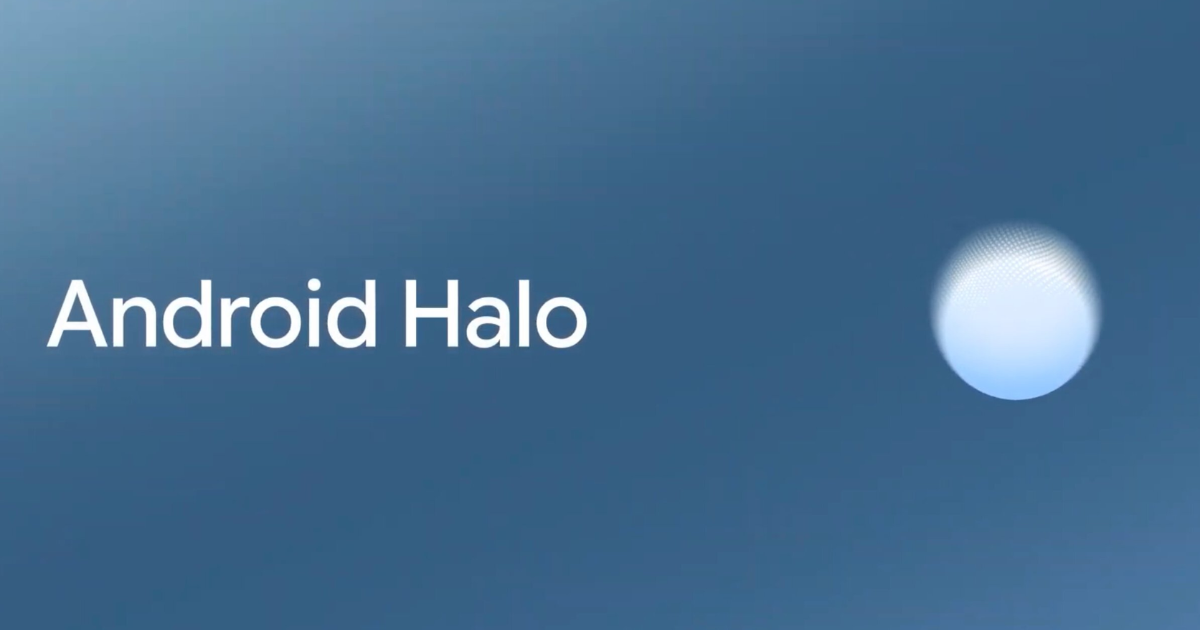
On July 1, 2026, Sameer Samat, President of Android, and Logan Kilpatrick, Product Lead for Google AI Studio, pulled back the curtain on the underlying architecture of Android Halo.
First teased at Google I/O in May, Halo is much more than a slick, animated status bar icon. Beneath the surface layer of user interface polish lies a rigid, unyielding engineering constraint: a virtual window system designed to sandbox AI agents inside isolated container walls they are structurally incapable of breaching.
App-Switching is Dead; Long Live the Status Bar
Until now, background AI tasks on mobile devices have inhabited a deeply awkward user experience purgatory.
They are far too complex and long-running to make sense as a fleeting notification, yet entirely too disruptive if they constantly hijack your screen with full-page interrupts.
Android Halo carves out a third category. When you delegate a multi-step task to an agent, it collapses directly into a dedicated slot in your status bar.
It sits there quietly—glanceable, non-intrusive, and persistent—allowing you to stay focused on whatever you are currently doing.
If the agent hits a snag, needs a quick clarification, or crosses the finish line, it surfaces the prompt right there.
“It’s a dedicated location in the status bar where your agent of choice — Gemini or other agents — can actually update you and get input from you on the task or tasks you have in your queue,” Samat explained during a video breakdown on the Google Developers YouTube channel. “We think that’s an interesting new spot for how computing may evolve, and the operating system makes it more seamless for you to engage with these things that are running long-running tasks for you.”
The Architecture of the Virtual Wall
While the interface upgrade is a massive win for daily multitasking, the real triumph here is security. By default, an autonomous agent that can browse the web, open apps, and execute system-level commands possesses an incredibly dangerous attack surface.
Halo mitigates this by running the agent and its target application inside a containerized virtual window.
This boundary isn’t a polite request coded into the agent’s system prompt; it is an absolute architectural enforcement.
The agent cannot reach into other local applications, cannot scrape data outside its immediate designated environment.
Samat described this as a tailored virtual window system where the app and the agent “can exist in a window that can be minimized to the status bar, a.k.a. Halo,” explicitly confirming that “the AI agent can’t leave that container, so it can’t use other apps.”
Google has kept its cards close to its chest regarding the exact OS-level primitive powering this boundary—whether they are leveraging Linux Landlock, seccomp, process-level sandboxing, or a microVM framework remains unconfirmed. But the behavioral restriction is absolute: the agent is locked in its box.
Breaking the Monopoly: An Open Ecosystem
Crucially, Google isn’t locking this ecosystem down as a proprietary tollbooth for Gemini. Both Samat and Kilpatrick confirmed that Halo is built as platform infrastructure open to third-party assistants.
This openness isn’t just a benevolent design choice; it’s a regulatory necessity.
Under Article 6(7) of the European Union’s Digital Markets Act, Google is legally obligated to provide rival AI developers with the exact same system-level access that Gemini enjoys—a reality reinforced by specification proceedings opened by the European Commission earlier this year.
While we don’t know which third-party digital assistants will be standing on the virtual starting grid at launch, Halo is positioned as a foundational shift for the entire mobile ecosystem.
It reflects a broader architectural commitment from Google to transition Android from an OS that merely launches apps into an intelligent infrastructure layer that safely negotiates user intent.
When Does Halo Drop?
While Android 17 rolled out to Pixel owners on June 16, 2026, Halo was notably absent from the initial build.
Google has promised the feature will arrive “later this year,” but industry signals point to a much more specific launch window.
Historically, Google uses its Quarterly Platform Release 1 (QPR1) updates to debut new flagship hardware.
Multiple tech sources heavily anticipate that an early, production-ready version of Android Halo will officially break cover alongside the Pixel 11 lineup this August.
We are likely only six to eight weeks away from seeing if Google’s virtual walls can truly tame the chaotic potential of autonomous AI.
Until then, Halo remains a highly promising, heavily anticipated blueprint for the future of mobile computing.











“I never thought I’d enjoy training this much until joining Sportif. The coaches are supportive and really know how to bring out the best in you.”